Before we dive into this issue: I’m raising $30,000 to help bring the next chapter of SoCurious to life, with new creative products, artist-led workshops, and a community that helps grown-ups reconnect with their creativity. It’s a big, ridiculous dream, and I’d love your help making it happen. Learn more at socurious.co
I thought The Artist’s Way would help me become a better artist. I didn’t expect it to literally blow up my entire life.
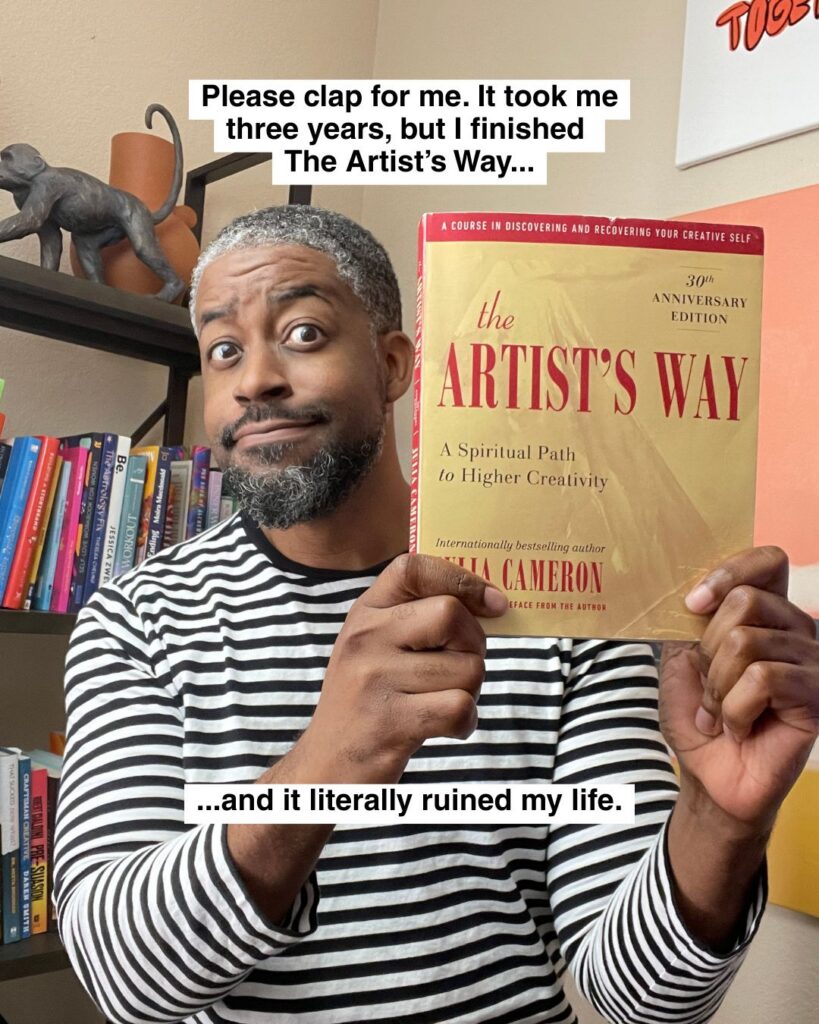
Please clap for me: It took me three years to finish this 12 week book.
I started reading the Artist’s Way in 2022.
At the time I was a creative director in advertising.
In the three years it took to finish that book, I had a mental breakdown, quit my toxic corporate job, and started building a business around my art and writing.
Now I run a stationery company I believe will be bigger than Hallmark.
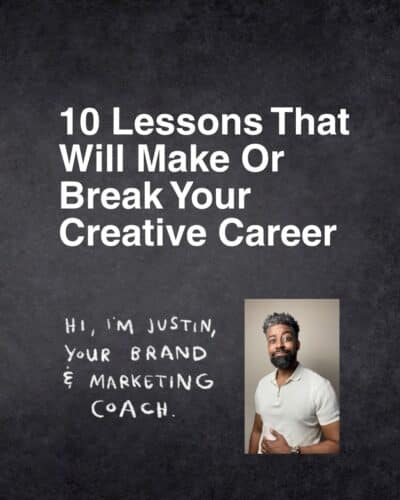
My name is Justin and I’m on a mission to save human creativity.
Starting with my own.
In this video, let’s talk about the exercises that helped, the things I resisted, and why getting unblocked was both the best and hardest part of reading The Artist’s Way.
What is The Artist’s Way
The Artist’s Way is a 12-week creative recovery system disguised as a book. I’ve read my fair share of self-help books and craft books for writing and art, but this one is different. It’s a spiritual + psychological + emotional reconditioning program for people who feel disconnected from their creativity.
At its core, it’s built on this belief: Creativity isn’t something you “learn.” It’s something you unblock.
There are two anchor practices in the book:
1. Three handwritten, stream-of-consciousness pages every morning — called Morning Pages
2. A weekly solo Artist Date to rebuild your relationship with inspiration and reconnect with the pleasure of art
How did the book affect you
Yes — in the best and worst ways.
The biggest gift of the book was becoming an unblocked artist.
The biggest curse of the book was… well, becoming an unblocked artist.
I spent the majority of my life and career following the rules that were laid out in front of me, while letting my personal creativity sit in the margins of my life.
But after about six months in any “good” job, I’d feel myself losing interest and quietly working on my next plan to build freedom from a 9–5.
Not because I wanted to — but because it always felt like there was more I needed to do with my life than sit in Zoom meetings for nine hours a day.
The Artist’s Way gave me permission to slow down and actually examine what was standing in the way of my creativity.
It helped me realize I had ADHD. And that acknowledgment and acceptance of myself led to a sturdier sense of self-worth.
That self-worth helped me evolve my creative voice and see that, as a multipassionate creative, I’m so much more than one talent.
I’m a writer. An illustrator. A strategist. A marketer. An actor. A singer. An editor. An entrepreneur.
But most importantly, it’s the combination of these things that makes me uniquely qualified to build a business around my art.
What About Morning Pages
Now the full truth: I did not do Morning Pages every single day, but I journaled in some form at least five days a week.
Oftentimes, that looked like writing 10 things I’m grateful for and how each one made me feel. But most of my long-form writing focused on fears, anxieties, and worries — and then rescripting them. Or answering the prompts in the book.
They helped me uncover patterns I couldn’t even see in myself.
I’ve done therapy on and off for nearly a decade, but there’s something different about letting yourself write what you’re actually thinking. It clears the clutter so you can sit down and truly create.
How did the book change you?
I’d actually reframe this question to be: what broke open for you emotionally?
1. Safety changes everything.
I started to understand that play, creativity, and expression don’t come from motivation — they come from nervous-system safety.
When I feel safe, my inner child can create. When I don’t, I try to protect myself. A lot of my “blocks” were just self-protection wearing different masks.
2. Confident decisions reorganize reality.
Something shifted when I noticed how life responds to clarity. Not to wishing. Not to thinking. Not to planning. But to choosing.
Real decisions create momentum when you’re willing to take the first step. They invite alignment. They generate movement where there was stagnation.
3. I learned how to trace my inner voice.
The book taught me how to follow self-criticism back to its source. To ask where it came from. Who introduced it. Why I believed it. That process changed how I relate to my thoughts. Some of them carry wisdom.
Many of them are just old recordings I had to learn how to let go.
4. I became aware of destabilizing energy.
There are people who unconsciously (and sometimes consciously) create confusion, doubt, and emotional volatility around them. Learning to recognize that it’s not my responsibility to heal unresolved energy changed how I choose proximity, access, and emotional boundaries.
If it disrupts my peace for too long, I release it now with ease.
5. Time stopped feeling like an enemy.
The idea that life has an expiration date on becoming who you’re meant to be quietly dissolved. The pressure softened. The panic faded. I stopped experiencing time as a closing door and started experiencing it as open terrain.
That’s why this 40 year old had the confidence to choose a new dream and start over. Yes, It’s scary, but this is my life and I’m going to design it to be as enjoyable as possible.
Would you recommend the book to other artists?
This is a hard one.
I’m the most aligned I’ve ever been in my life. My work feels more like me than ever. And I have a renewed relationship with spirituality, God, my ancestry and how that connection shows up in my work.
But baby — my life also literally fell apart.
Everything that was out of alignment started to fall away. And that process was incredibly challenging. There was so much heartbreak and I had to mourn all the versions of myself I lost.
For me, though, it was worth it.
My only real regret is that I wish I’d done it sooner.
Because the person I am now, on the other side of all that transition and change, is the version of me I’ve always wanted to be.
So if you’re willing to risk blowing up everything you know in order to truly connect with the artist you’re meant to become — yes, I think it’s for you.
It will change you in the best ways.
If that sounds too scary right now, maybe don’t try it.
My critiques of the book
1. There’s lots of God language
I grew up Southern Baptist, so it wasn’t a hiccup for me, but If you don’t believe in a higher power, this book may be challenging. She references God in almost every chapter and in most of the questions.
2. You can’t just read it
This isn’t a book you casually read — you have to do it. And the exercises that are hardest to do are usually the ones you need the most.
They’re the ones that lead to the biggest breakthroughs.
For example, there was an exercise where she asks you to make a collage. I skipped it for over a year. When I finally did it, I realized collage is one of my favorite ways to express myself.
3. The timeline is unrealistic
The book is incredibly dense. I genuinely don’t understand how anyone could complete it in three months. That feels impossible — unless you’re unemployed and treating it like a full-time job.
But I will say this. Whenever I picked the book up after an extended break, the next section I read was EXACTLY what I needed to learn for that next phase in the journey.
Final Thoughts
Finishing The Artist’s Way feels like coming home to myself.
It gave me language for things I’d felt for years but couldn’t name.
It changed how I move through my work, my choices, and my inner life.
And I don’t think I’ll ever relate to my creativity the same way again.
To close us out this week, I want you to answer this journal prompt: Write a letter to the part of you that has been afraid to create. What does it need to hear in order to feel safe enough to start again?
I Have a Big, Ridiculous Dream. And I Need Your Help.
Well, this is terrifying.
I’m officially asking the internet to help me build the next chapter of my stationery company.
But first, some back story.
In 2024, I had a mental breakdown and left my toxic corporate job as a creative director.
Art helped me find my way back to myself.
Now I’m building SoCurious.
An everyday creativity company helping people reconnect with themselves, their community, and their joy.
I have BIG dreams for what comes next.
Creative kits.
Artist-led classes.
A community where grown-ups can make stuff and reclaim their creativity.
I can’t build this alone.
I launched a $30,000 crowdfunding campaign to bring SoCurious Create to life.
For $30, you can become a founding supporter and get a year of monthly creative workshops and live gatherings.
If you believe the world needs more art, play, and imagination, I’d love your help.
Support the campaign at socurious.co